Why Is My Garage Door So Loud? Common Causes of Grinding, Squeaking & Rattling
Why Is My Garage Door So Loud? Common Causes of Grinding, Squeaking & Rattling
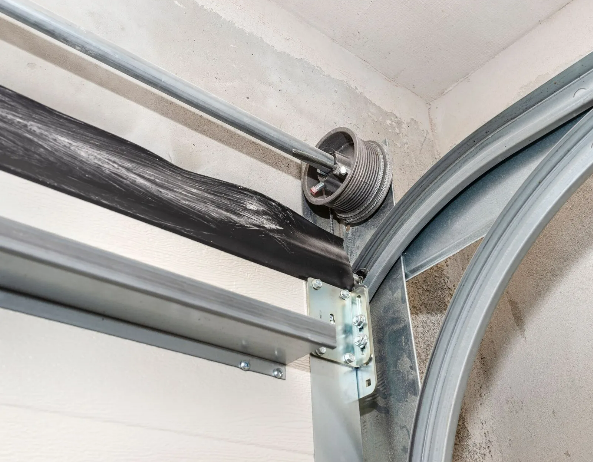
A garage door should hum along in the background of your day. If yours has started grinding, squeaking, or rattling, it’s telling you something. Noise is usually the first sign of wear, and it’s much cheaper to deal with than the breakdown that follows.
If you’ve been typing “garage door repair near me” into your phone after another loud morning, this guide covers what each sound usually means, what you can safely do yourself, and when to call someone.
Noisy Garage Door in Tulsa? Start by Identifying the Sound
Different sounds point to different parts. Listen closely the next time the door runs, and note when the noise happens: at the start, the middle, or the end of the cycle.
Grinding
Grinding usually comes from metal on metal. The most common culprits:
- Worn rollers. Rollers that have lost their bearings or developed flat spots grind inside the track instead of gliding.
- Dirty or damaged tracks. Debris and dents create friction the rollers have to fight through.
- A worn opener gear. If the grinding comes from the motor unit overhead rather than the door, the gear inside may be stripped.
Grinding is a sound to take seriously. Left alone, a worn roller can chew up the track, and now you’re replacing more than one part. Professional garage door repair is the right call once you hear it consistently.
Squeaking
Squeaking almost always means dry metal. Hinges, rollers, springs, and pivot points all need lubrication, and they lose it over time.
A garage-door-specific lubricant (not WD-40, which is a solvent and cleans away grease rather than replacing it) applied to hinges, spring coils, and roller bearings often quiets things down. Never apply it to the tracks themselves, since that collects dust and makes the problem worse.
If the squeaking returns within a few weeks, something is wearing out underneath.
Rattling
Rattling usually means something has come loose. Garage doors flex and vibrate thousands of times a year, and bolts work themselves free.
Check these:
- Bolts and brackets on the tracks
- Hinge screws
- Mounting hardware on the opener
- The door’s connection to the opener arm
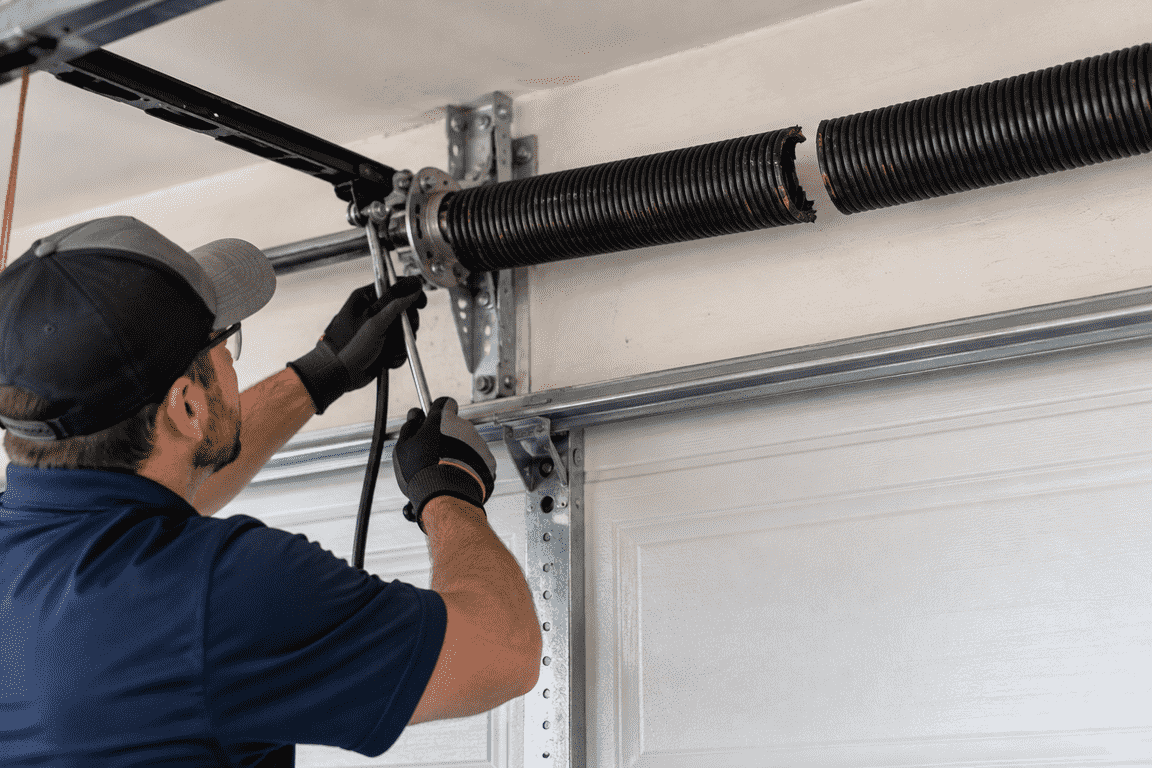
Tightening loose hardware with a socket wrench is a safe DIY fix. Just leave the springs and the lower bracket (the one anchoring the cables) alone.
Those are under high tension and need a trained technician.
Popping and Banging
Popping often points to a spring that’s stretching or beginning to fail. A loud bang followed by a door that won’t lift means the spring has snapped. Stop using the door and call for help right away.
Is It the Door or the Opener?
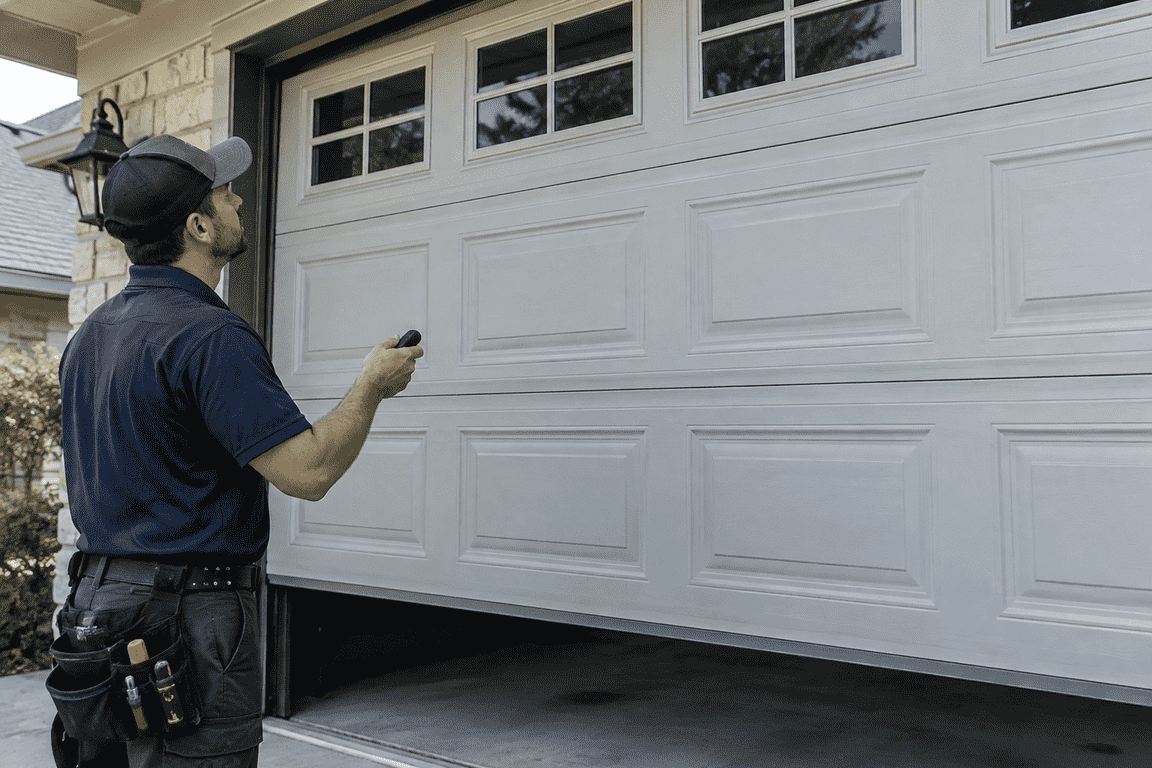
Here’s a quick test. Disconnect the opener using the emergency release cord, with the door fully closed, and lift the door by hand. If it moves quietly, the noise is coming from the opener. If it still grinds or rattles, the problem is in the door, rollers, tracks, or springs.
Opener noise often comes down to age. Chain-drive models are naturally louder, and older units get rougher as parts wear. Upgrading to one of the remote control openers with belt drive or a quieter motor can make a real difference, especially if your garage sits under a bedroom.
Garage Door Roller Repair in Tulsa: When It’s Time to Replace
Rollers take more abuse than almost any other part. A standard roller lasts several years, and heavy daily use shortens that. Signs it’s time to replace them:
- Visible cracks, chips, or flat spots
- Wobbling in the track
- Rough, jerky travel
- Grinding that gets worse with each cycle
Roller replacement is a quick job for a technician with the right tools. It’s also one of the best ways to quiet a door and protect the tracks from further damage.
Garage Door Maintenance in Tulsa: Prevent the Noise Before It Starts
Most noisy doors are really neglected doors. A simple routine keeps things quiet:
- Listen and watch monthly. Run the door and note any new sounds or jerky movement.
- Tighten hardware twice a year. Check bolts, brackets, and hinges.
- Lubricate moving parts. Do it once or twice a year, using the right product.
- Wipe the tracks. Keep them clean and free of debris.
- Test the balance. If the door won’t stay halfway open when lifted manually, the springs likely need attention.
Tulsa’s temperature swings and humidity put extra stress on metal parts, so regular garage door maintenance pays off here. An annual professional tune-up catches worn parts before they turn into emergency repairs.
When Noise Means It’s Time to Replace the Door
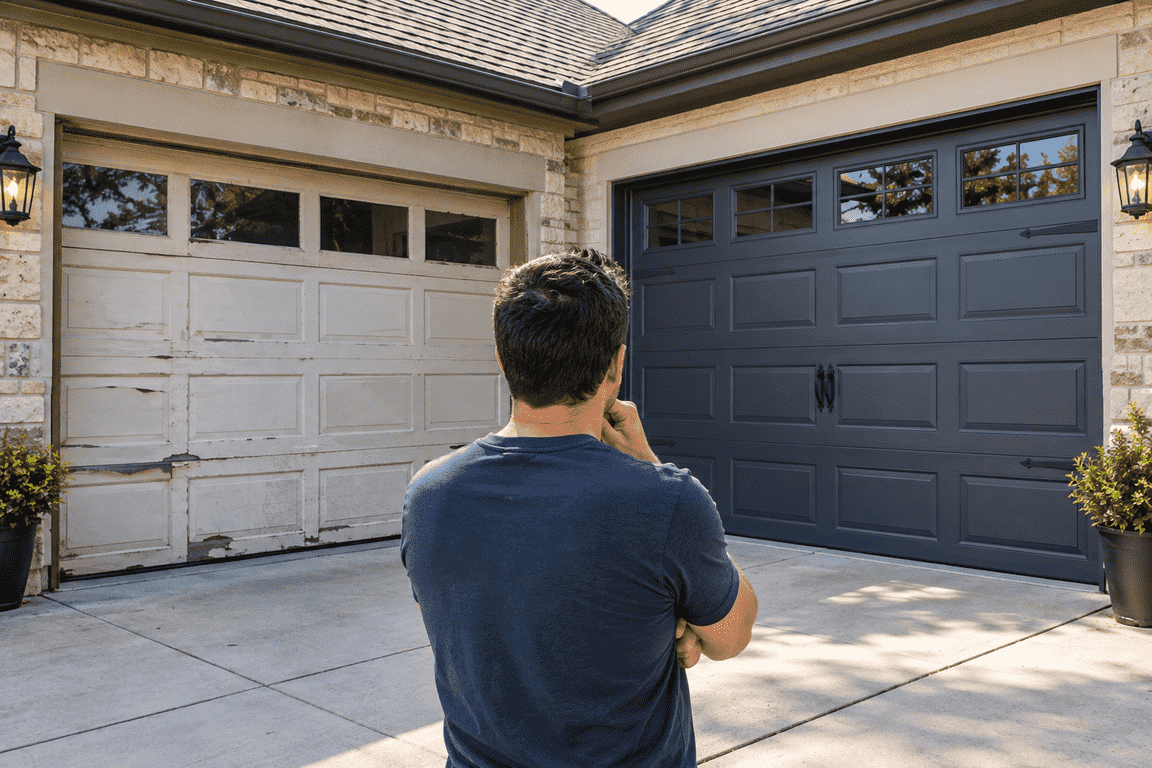
Sometimes the noise isn’t one failing part. It’s the whole system aging out. If you’re paying for repeated repairs, the panels are bent or cracked, or the door is decades old, a new door may cost less than continued patching. A modern garage door installation typically runs far quieter, thanks to better hardware, nylon rollers, and improved insulation.
Professional Garage Door Service in Tulsa
Some noise is easy to fix. Some is a warning. Telling them apart takes experience, and guessing wrong around springs and cables can get someone hurt.
Pro Overhead Door has provided garage door service in Tulsa, Broken Arrow, and the surrounding area since 1989. The family-owned company works on all makes and models, and you can read what other local homeowners have said about their experience.
Don’t Ignore the Noise
A loud garage door rarely fixes itself. Grinding, squeaking, and rattling are early signs of wear, and catching them early usually means a smaller repair and a shorter wait.
If your door is making noise you can’t explain,
contact Pro Overhead Door or call
918-251-9099 to schedule an inspection. A technician can find the source and recommend the simplest fix.